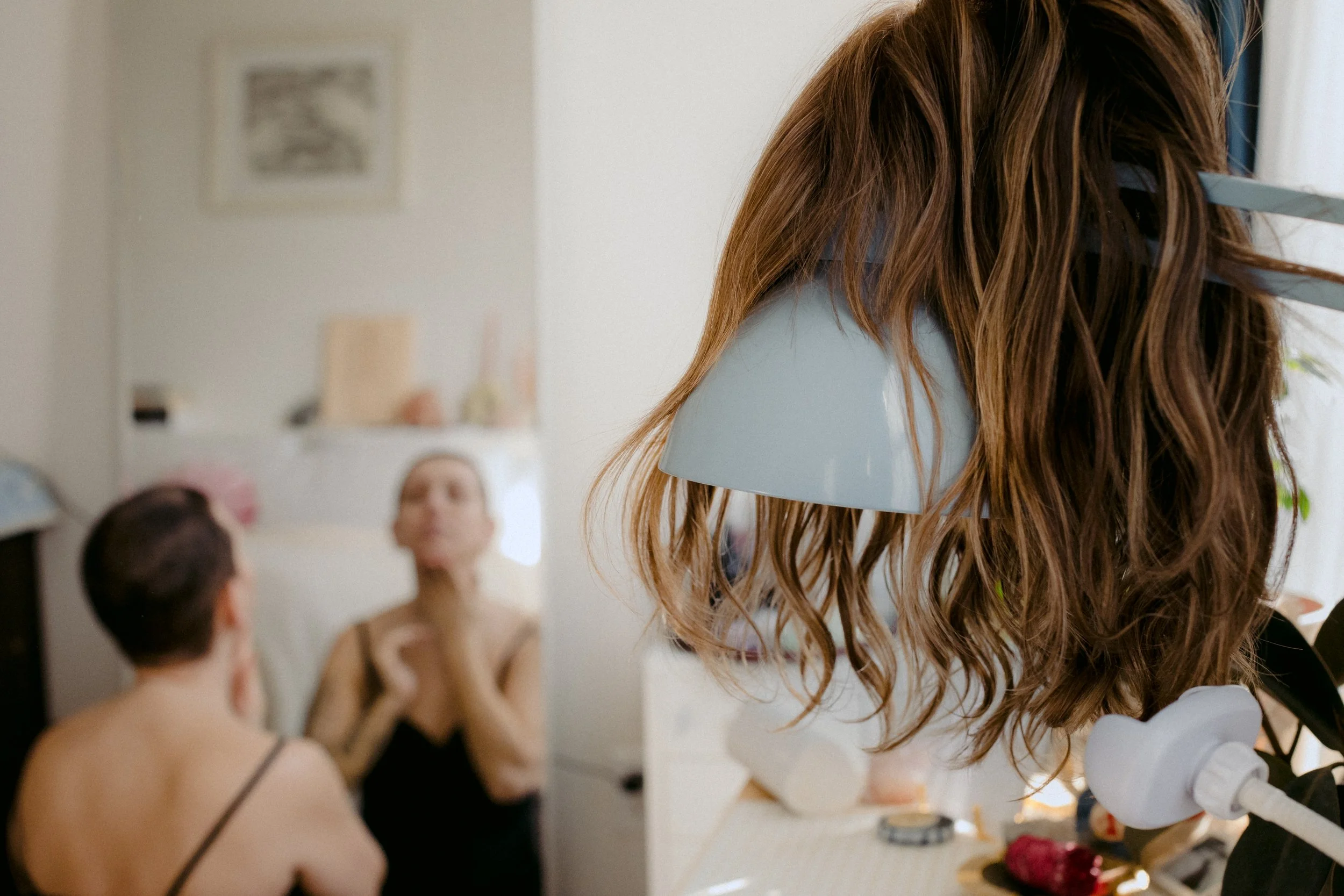
Let’s Talk About Wigs!
Everything you need to know about buying, wearing & caring for your wig
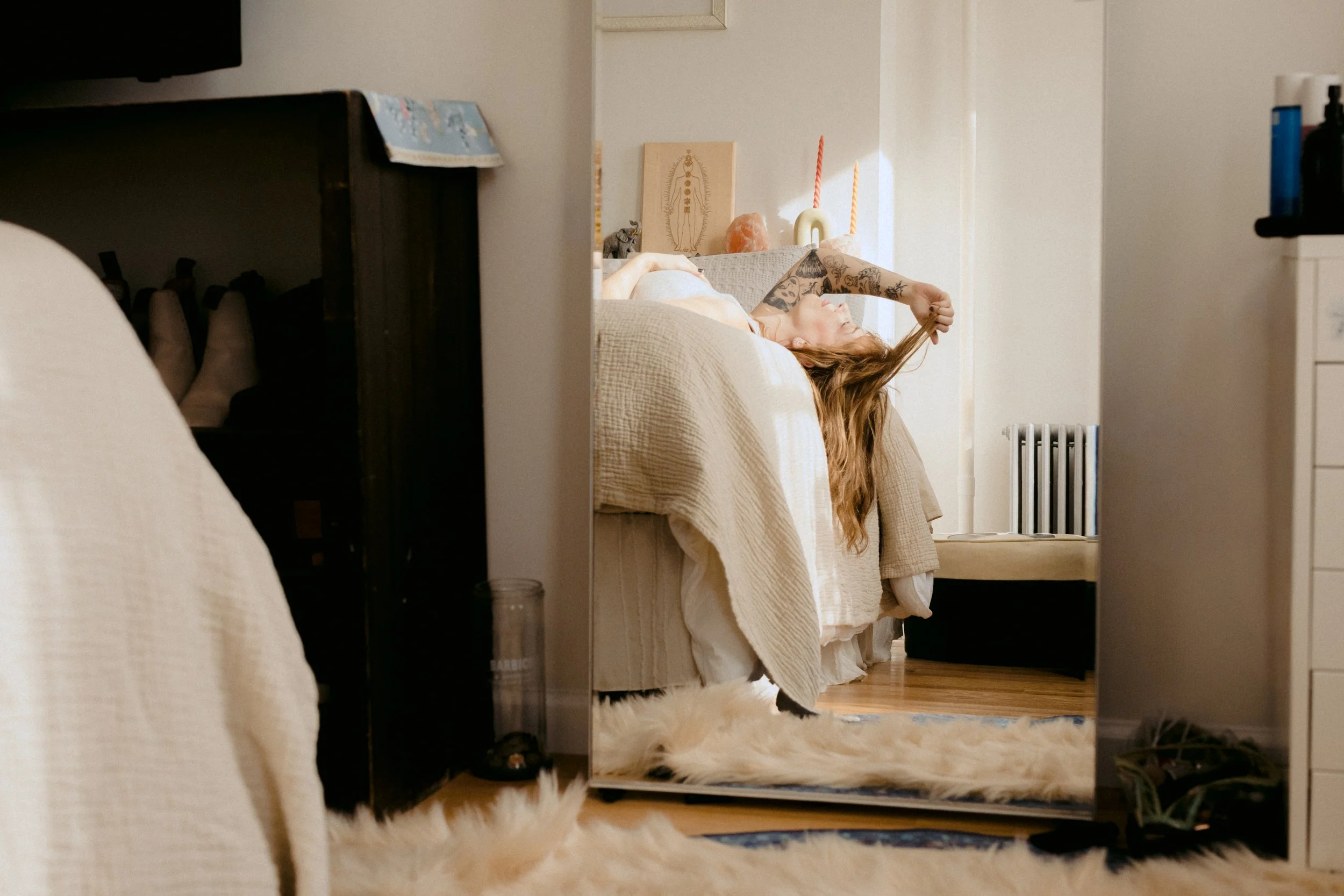
I didn't start wearing wigs for fashion. I started because I was pulling out my hair. As a hairstylist, your hair is your advertisement. So I quickly understood I was starting my career at a deficit. Not only was I new to the craft, I didn’t have much hair on my own head. Needless to say, my self-esteem was low, so I learned to think creatively and bravely open myself up to the world of wigs.
For a long time, I didn’t feel empowered by wigs. The industry told me that to be a “real” stylist, my natural hair had to be the proof. I even lost out on a salon job because I showed up to the interview wearing a wig. The interviewer didn’t see my skills; they saw a cover-up and told me their clients wouldn't trust me.
That moment stayed with me. Not because it was right but because it clarified something. My values and taste were never going to be rooted in conformity. They were rooted in expression. That realization is part of what led me to build Queen of Swords; a space that celebrates individuality and holds people with care.
Actors wear wigs constantly. Musicians wear them on stage. Fashion shoots and runways rely on them. Stylists experiment with them all the time. Once you start noticing, you realize wigs are far more common than people think. For me, wigs became part of my life through necessity, but they’ve evolved into something much bigger than that. They became a creative tool, a form of expression, and a way to decide how I want to show up in the world.
Hair is one of the first things people notice about us. It’s tied to identity, culture, beauty standards, and self-perception. So when you change your hair, even temporarily, it can change how you feel moving through the world.

Identity, Protection & Play
Hair has always been tied to identity. Because of that, it’s also been a place where society tries to set rules like what looks “professional,” what looks “feminine,” and what looks “appropriate” for your age, your job, or your culture. There’s often an unspoken expectation that once you find a look, you’re supposed to stay there.
Wigs disrupt that idea.
They allow you to change your appearance without asking permission; to try on different eras, moods, and versions of yourself. They help you step outside the expectation that you must always look one consistent way. In that sense, wigs can feel strangely empowering. They return a sense of authorship over how you appear. You’re not locked into one identity; you get to explore what feels right in the moment.
Sometimes that exploration is playful. One day you might want long, glamorous waves. Another day you might feel like something short, sharp, and graphic. It’s not so different from choosing an outfit. You’re responding to the moment, the season, and the energy you want to carry.
And sometimes wigs serve a different purpose entirely: protection. Like when I was going through cancer treatment, I didn't want people feeling sorry for me. During times when I feel more vulnerable or unsure, putting on a wig can feel a little like wearing armor or even an invisibility cloak. It creates a small layer of distance between me and the assumptions people make when they look at me. Instead of the world deciding what my hair says about me, I get to decide what version of myself I’m presenting that day.
There’s something powerful in that choice.
Hair can shift with the seasons of your life, the way your clothing does. In winter, wigs can feel cozy and grounding. In summer, maybe expression comes through scarves, head wraps, or lighter styles that move with outdoor life.
The point isn’t perfection. It’s the freedom to ask yourself a simple question: What do I feel like embodying today?
Frequently Asked Questions
-
Start simple. You don’t need to jump into something dramatic right away. I usually suggest a “gateway” wig: a length you’re already comfortable with (like a bob or shoulder-length) and a color close to your natural shade. That way, you’re adjusting to the feeling of wearing a wig without also adjusting to a completely new identity at the same time.
If you want more guidance, this is something I help with in person. You can book a consultation and we’ll talk through what makes sense for your lifestyle, your comfort level, and how you want to show up.
-
This is real. There are moments where it can feel vulnerable like dating someone new, being at the beach, or someone asking too many questions. And not everyone who wears a wig wants it to be a conversation.
You don’t owe anyone an explanation.
Sometimes it’s about privacy. Sometimes it’s about safety. And sometimes it’s just about not wanting your appearance to be dissected. Over time, for me, that feeling shifted. What used to feel like something I had to hide became something I chose. I began to embody the wig and start to feel MORE like myself. But that didn’t happen overnight. Catherine O’Hara’s character, Moira, from Schitt's Creek opened my eyes to the possibilities! You get to move at your own pace with it.
-
This is everyone’s first fear and it’s very unlikely. Most wigs come with built-in combs or adjustable straps. You can also use a velvet band or a wig cap for extra security. When it’s fitted properly, it feels stable. You can move, go about your day, and be in the wind; it’s not going anywhere. It’s less fragile than people think.
-
Think of a wig like a garment. Out of the box, it’s “ready,” but a professional cut or customization can make it feel tailored to you. That’s something we can do at the salon, shaping it, softening it, and making it sit naturally on you.
For maintenance:
Wash it gently (similar to how you’d wash your own hair, but less frequently)
Use cool to lukewarm water
Let it air dry when possible
Store it on a wig stand so it keeps its shape
Human hair wigs can be styled more like natural hair. Synthetic wigs need a little more care with heat, but they hold their style well. It doesn’t have to be complicated. Once you get used to it, it becomes part of your routine.
-
Sometimes yes, sometimes no, and both are okay. A well-fitted, well-cut wig can look incredibly natural. But even when people do notice, it doesn’t have to be a negative thing. Wigs don’t have to be about passing. They can be about expression. The goal isn’t to disappear. It’s to feel like yourself or embody the version of yourself you want to be that day.

Choosing Your Wig
-
The Vibe: Looks and moves like natural hair. You can cut, color, and style it however you want. Feels elevated, believable, and seamless.
The Catch: More expensive. Requires regular styling and care.
-
The Vibe: Pre-styled and easy. Holds its shape well. Affordable. Great for experimenting with different looks. Can be playful, even a little camp (in a good way).
The Catch: Less customizable. Most can’t handle heat. Can read less natural up close.
-
The Vibe: Full, voluminous, breathable. Great everyday option.
The Catch: Fixed part. Can look less natural at the root.
-
The Vibe: Natural-looking hairline. You can wear hair off your face.
The Catch: Lace is delicate—needs care.
-
The Vibe: Realistic “scalp.” You can part it anywhere.
The Catch: More expensive. Slightly warmer.
-
The Vibe: The most natural movement. Lightweight, comfortable, “couture.”
The Catch: Highest price point.